
Let’s Talk Gymnastics: What to Expect

Starting gymnastics is an exciting step for children—and it can be unfamiliar territory for parents. This guide outlines what a typical introductory term involves, how skill development actually works, and the most effective ways you can support your child’s progress.
1) What a Typical Class Involves
Gymnastics classes follow a structured format designed to help children feel secure, focused, and ready to learn.
Warm‑up (5–10 minutes)Light cardio, movement games, and mobility work to prepare the body for safe training.
Shapes and Foundations (10–15 minutes)Coaches develop essential physical fundamentals: body tension, balance, safe landing mechanics, and core stability. These elements may appear simple, but they are the basis for every future skill.
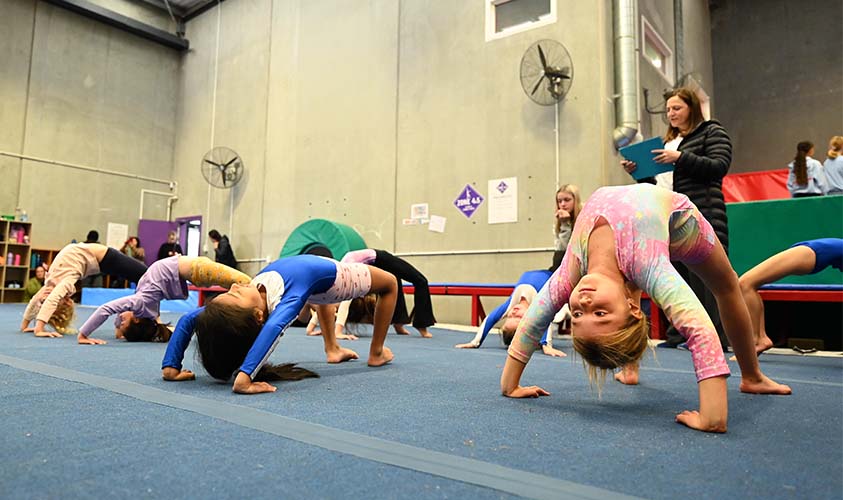
Stations / Circuits (20–30 minutes)Gymnasts rotate through a series of apparatus or activity stations—floor, bars, beam, vault-style drills, trampoline, strength, and flexibility (depending on the programme and facility). Tasks are adjusted for each child’s confidence and capability, not just their age.
Cool Down and Review (2–5 minutes)Stretching, breathing, and a brief recap of the session’s focus.
2) What Children Learn First
Early gymnastics prioritises control, safety, and body awareness before introducing complex skills.
Children typically develop:
- Safe landing mechanics
- Rolling and falling safely
- Balance and coordination
- Hanging and grip strength for bar work
- Core tension and body shapes
- Advanced skills—walkovers, handsprings, flips—are introduced only once these foundations are consistent and secure.
3) How Progress Actually Works
Progress in gymnastics is not linear. It follows a staircase pattern: improvement, consolidation, and then the next leap forward.
Coaches assess readiness using criteria such as:
Consistency — performing a skill safely and reliably
Body position — correct form and control
Confidence — calm, committed attempts without hesitation
Strength and physical readiness — particularly through the shoulders, wrists, and core
Coachability — the ability to apply feedback
A slower pace of progression is often a sign of responsible coaching, not a lack of ability.
4) Why Coaches Reinforce Basics
Gymnastics is a technical sport built on precise foundations. A well‑shaped cartwheel becomes a clean round‑off later; a rushed cartwheel becomes a long‑term correction project.
Strong basics:
- Reduce injury risk
- Build confidence
- Make advanced skills significantly easier to learn
- Prevent the development of unsafe habits
5) What to Expect Emotionally
It is normal for children to experience a wide range of emotions as they adjust to a new environment and new physical challenges.
Interested in finding out more?
If your child is excited to move more, learn new skills or experience gymnastics first hand, get in touch today. From beginners to developing athletes with real potential on the national stage, we can help. Talk to us today.
Next in the Knowledge Hub
The XPG hub for quality science and education around movement, gymnastics and nutrition

Register for a trial!
Experience the joy of gymnastics and watch your child thrive in a fun, safe environment. Book a trial session today to find the class that's best suited to your child's age and experience.
